

Students Travel to Paris and Bordeaux to Explore France’s Diversified Economy, Global Brands and Role in the European Union
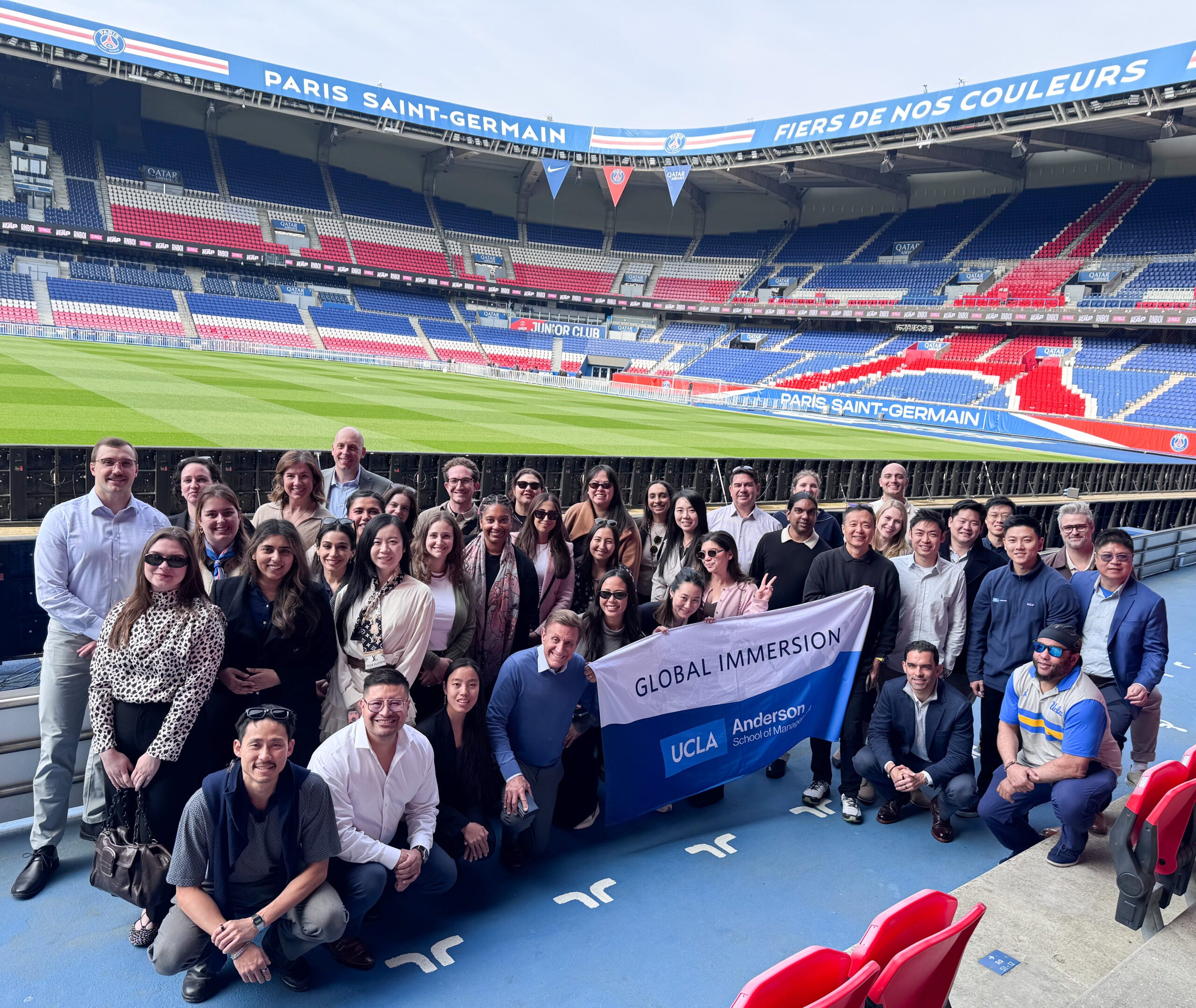
During spring break, from Sunday, March 22 through Saturday, March 28, 2026, forty MBA students representing all four UCLA Anderson MBA programs — full-time, fully employed, executive, and UCLA–NUS executive MBA — participated in the Global Immersion course “France: Its Diversified Economy, Its Global Brands and Its Role in the European Union.” Taught by Gonzalo Freixes, adjunct professor of accounting and longtime faculty member at UCLA Anderson, the course marked the fourth Global Immersion focused on France and the third time Professor Freixes had led a course to the country. Building on extensive pre-travel coursework and case discussions, the in-country week provided students with a rigorous, firsthand perspective on France’s economic structure, business environment, major industries, and evolving role within Europe and the global economy.
France offers an exceptionally rich context for examining international business. As the largest country in the European Union and one of its founding members, France plays a central role in shaping EU economic and regulatory policy. It has one of the world’s largest economies, is home to globally recognized brands across luxury, aerospace, energy, media, transportation, and consumer goods, and maintains deep historical, political, and economic ties with the United States. At the same time, France faces significant challenges, including labor market rigidity, demographic change, political fragmentation, public protest, and pressure to balance competitiveness with its strong social welfare model. The course explored how these forces shape strategic decision-making by firms operating in France and across Europe, while also examining cultural norms and institutional frameworks that influence how business is conducted.
The academic foundation for the immersion was established through three on-campus class sessions and videos prior to departure, during which students examined French history and culture, the structure and functioning of the European Union, and key French industries including automotive, luxury goods, aviation, healthcare, financial services, wine, entertainment, and entrepreneurship. A series of case studies, readings, and group research projects prepared students to engage thoughtfully with company executives, business leaders, entrepreneurs, and alumni during the in-country week. By the time students arrived in France, they were well-equipped to connect theory with practice and to contextualize what they observed on the ground.
Students arrived in Paris on Sunday afternoon and began the program with an immersive walking tour of the city’s historic Marais district. This introduction provided cultural and historical context, linking France’s political and social history to its contemporary urban landscape. The evening concluded with a river cruise along the Seine, offering a visual introduction to many of Paris’s landmark institutions and underscoring the city’s longstanding role as a political, cultural, and commercial center.
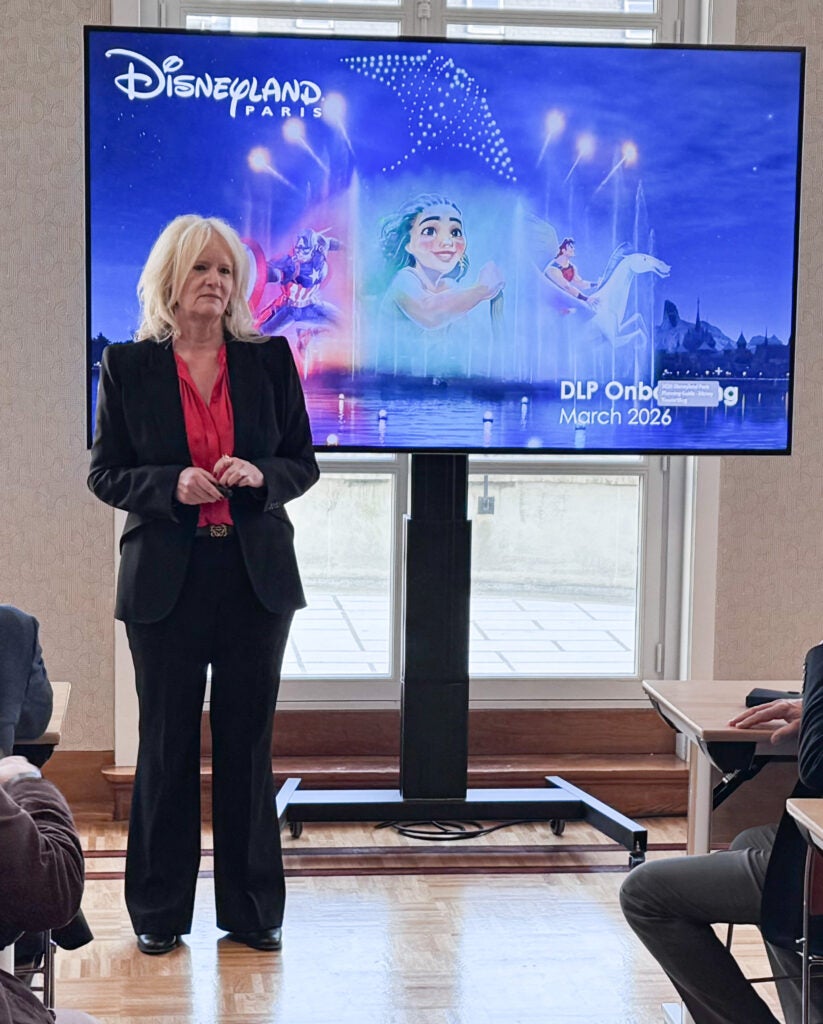
The formal academic portion of the immersion began Monday morning in Paris with sessions focused on tourism, entertainment, and the French business environment. Students met with Natacha Rafalski (’95), president of Disneyland Paris, who shared strategic insights into operating an American-founded theme park within a European cultural, regulatory, and labor context. Drawing on her decades-long career with The Walt Disney Company, Rafalski discussed leadership, cross-cultural management, brand stewardship, and the long-term evolution of Europe’s largest tourist destination. This discussion illustrated how global brands adapt their operating models to local markets while maintaining consistency with corporate values and identity.
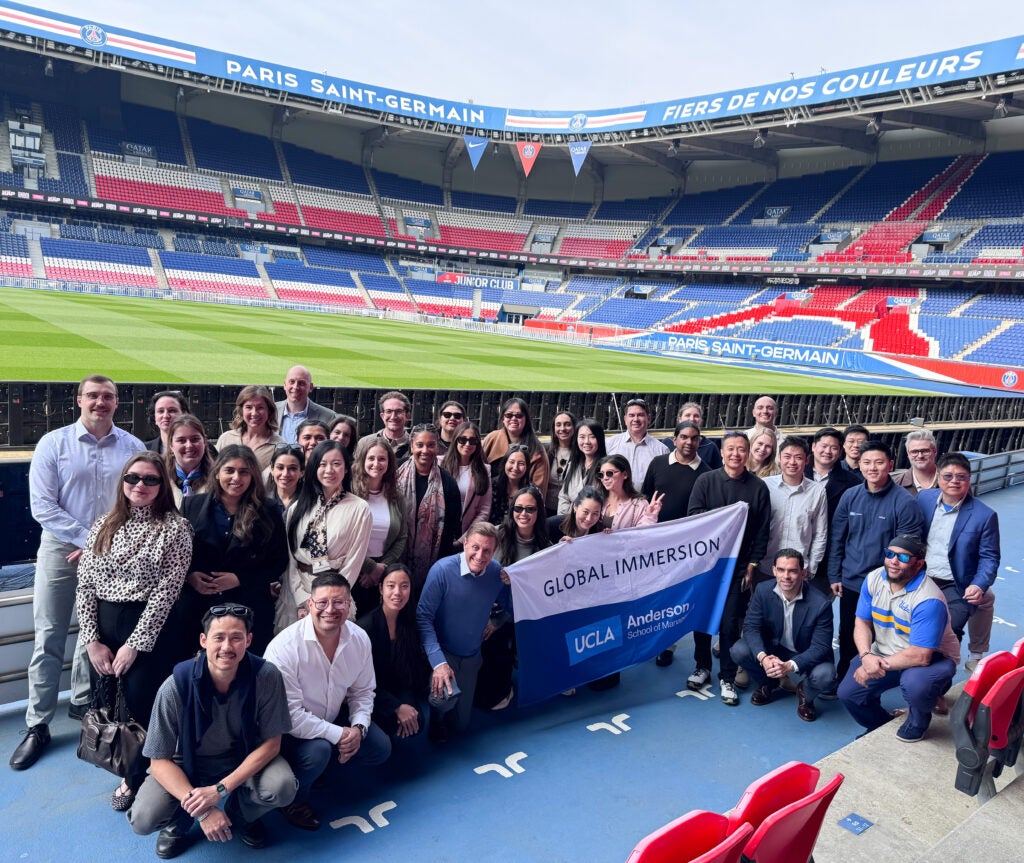
The morning continued with a session on the broader business environment in France led by Sebastien DeClerq (’97), managing director and partner at Alvarez & Marsal. DeClerq examined France’s economic structure, its regulatory and labor frameworks, and the historical forces that have shaped French attitudes toward business, markets, and globalization. His presentation highlighted both the challenges and opportunities facing companies operating in France, particularly in periods of economic uncertainty and institutional reform. In the afternoon, students visited Parc des Princes, home of Paris Saint-Germain Football Club, for an in-depth discussion on sports, branding, and global fan engagement. Senior leaders Matthieu Malapert and Fabien Allègre described PSG’s transformation into one of the world’s most valuable and visible sports brands, emphasizing digital engagement, lifestyle partnerships, and the convergence of sport, fashion, and entertainment.
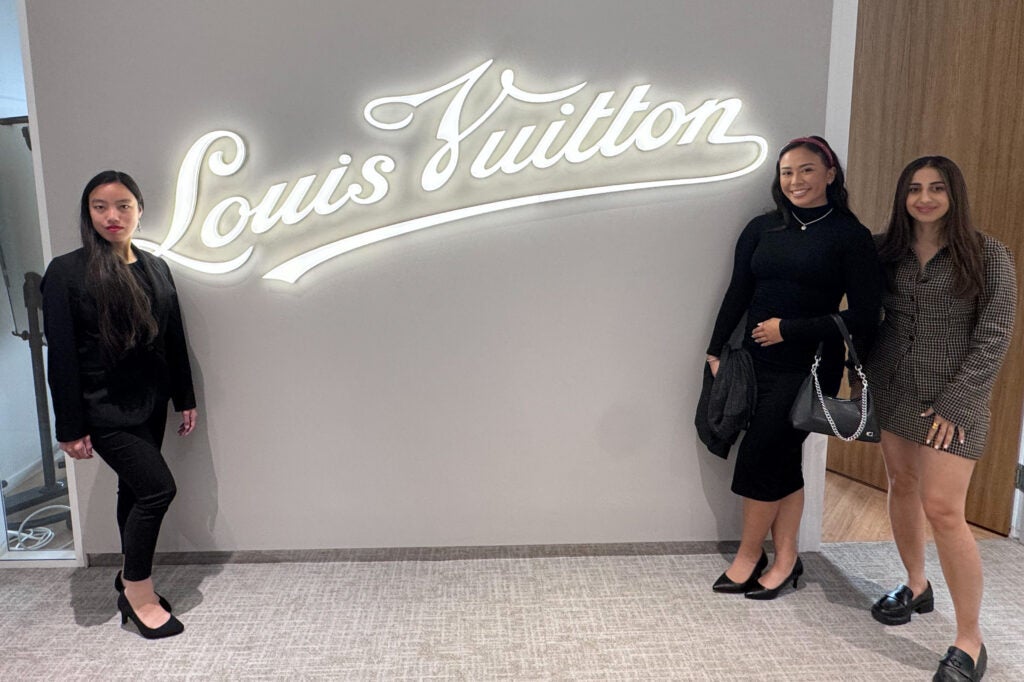
Tuesday’s program focused on the luxury sector, one of France’s most globally influential industries and a critical driver of economic growth and exports. Students visited LVMH for a comprehensive look at the Louis Vuitton brand, examining strategy, supply chain management, innovation, and organizational scale in global luxury. Yann Gilles and Valérie Dubois discussed how Louis Vuitton balances artisanal heritage with industrial excellence, technological investment, and operational agility across a vast international retail network. The session highlighted how vertical integration, data, and disciplined execution support both creativity and profitability in the luxury sector. This visit was complemented by a curated exhibition experience at LV Dream, which traced Louis Vuitton’s brand evolution and showcased its creative heritage and collaborations within the broader LVMH ecosystem.
In the afternoon, students traveled to Kering headquarters, where senior leaders explored how technology and artificial intelligence are reshaping luxury retail and customer engagement. Executives from Kering’s global retail, omnichannel, and data teams discussed how advanced analytics, AI, and digital platforms are transforming store operations, personalization, and decision-making across the group’s portfolio of luxury brands. The session underscored the strategic importance of technology as a competitive differentiator in a sector traditionally defined by craftsmanship, creativity, and exclusivity.
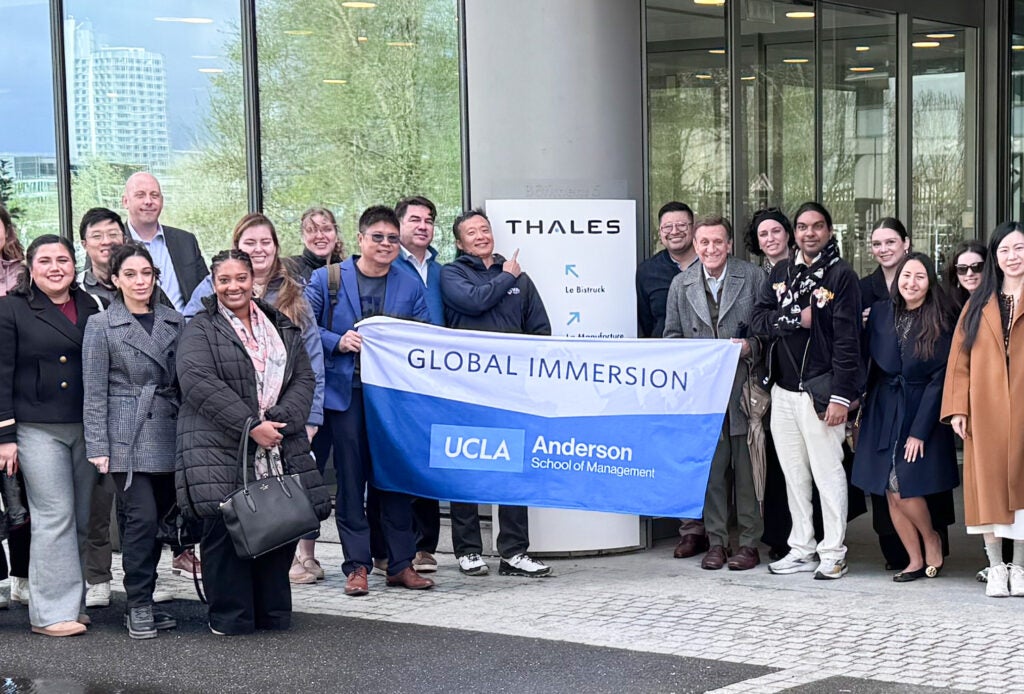
Wednesday’s program shifted attention to aerospace, entrepreneurship, and media. Students visited Thales Group headquarters to examine the role of aerospace, defense, and advanced technology in the French economy. Thales representatives discussed innovation, public-private partnerships, and France’s position within global aerospace and security markets, particularly in light of ongoing global security challenges and the growing demand for advanced defense and technology solutions. The conversation emphasized the strategic importance of long-term government collaboration, research investment, and international cooperation in sustaining globally competitive advanced technology industries.
Later that afternoon, students returned to Maison de la Chimie for a discussion on venture capital and entrepreneurship in France led by Anders Larsson (’05), founding partner of True Global Ventures and founder of video game studio Lightbulb Crew. Larsson shared insights into France’s startup ecosystem, venture funding landscape, and the opportunities and constraints facing entrepreneurs in Europe relative to Silicon Valley. The day concluded with a session on France’s global entertainment industry, where Isabelle Pain (’16) of Canal+ and Studiocanal explored content strategy, international film and television markets, the regulatory and structural dynamics unique to France, shifting consumer behaviors, and the growing globalization of media production and distribution.
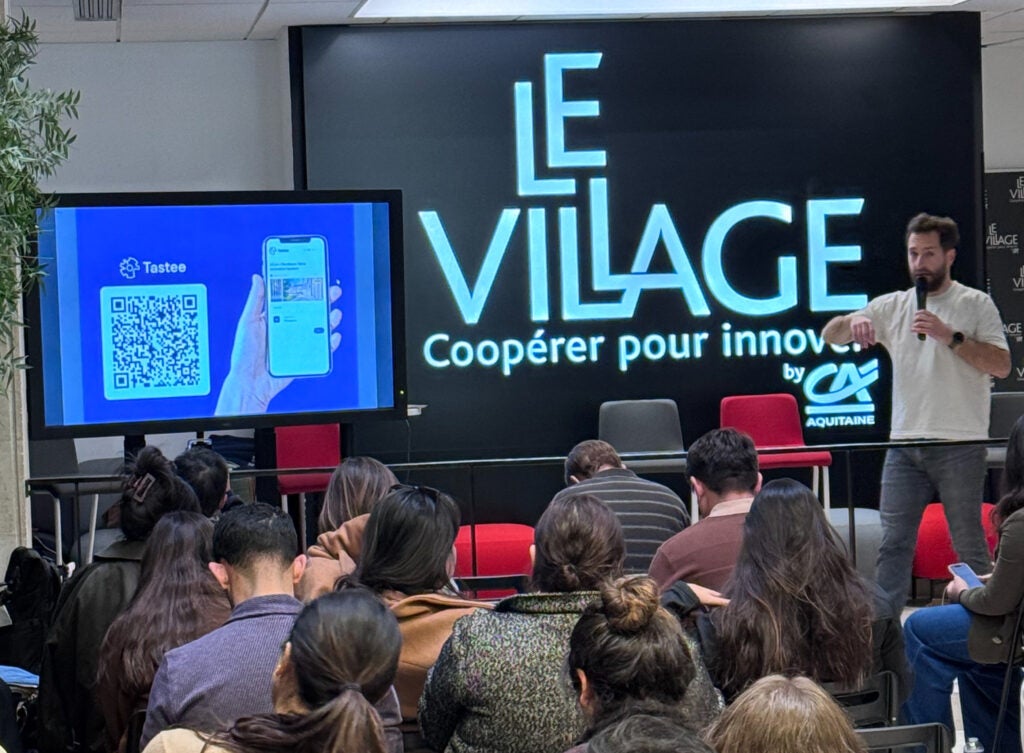
On Thursday, the group traveled by high-speed train from Paris to Bordeaux, shifting the geographic and industry focus of the program. In Bordeaux, students explored entrepreneurship, wine innovation, and healthcare. At Le Village by CA, a startup and innovation hub supported by Crédit Agricole, students were introduced to the WineTech ecosystem and the ways in which digital tools, data, and new business models are reshaping a centuries-old industry. Entrepreneurs and innovation leaders discussed applications ranging from vineyard management and climate resilience to digital marketing, distribution, and experiential tourism. The discussions highlighted how tradition and innovation coexist within the French wine industry and how entrepreneurship is emerging as a driver of regional economic development.
The afternoon concluded with a session on healthcare led by senior executives from Colisée France, one of the country’s leading private operators in elderly and long-term care. The discussion examined France’s healthcare system, public-private partnerships, demographic challenges, and operational complexities in delivering care at scale while maintaining quality and financial sustainability. This session provided students with a comparative perspective on healthcare systems and social services, reinforcing themes introduced during pre-travel coursework.
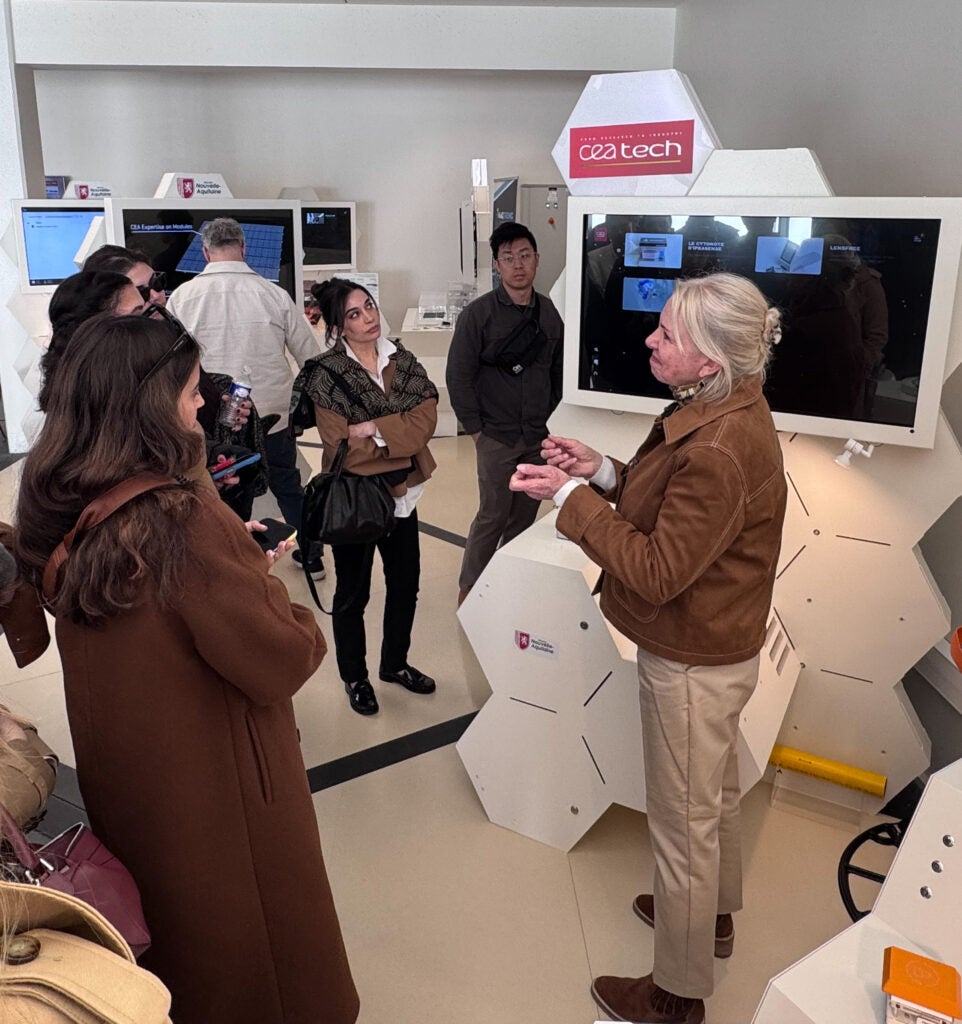
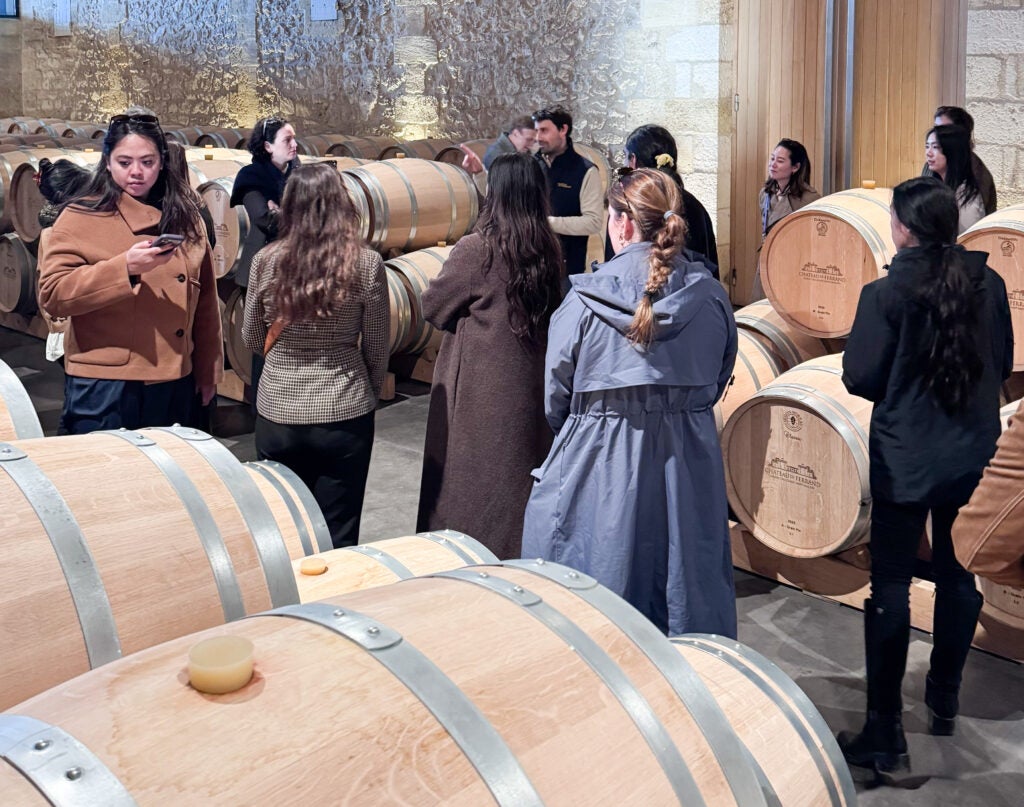
Friday’s program focused on technology, research, and the business of wine. Students visited CEA Tech in Pessac, where leaders discussed France’s applied research ecosystem and its role in supporting innovation across aerospace, energy, health, and digital industries. The visit illustrated how publicly funded research institutions collaborate with private companies to transfer technology from laboratories to market. In the afternoon, the group traveled to Saint-Émilion to visit Château de Ferrand, a Saint-Émilion Grand Cru Classé estate. Through discussions with the estate’s leadership, students explored vineyard economics, brand positioning, global wine markets, and the strategic choices facing producers amid climate change and shifting consumer preferences. The visit concluded with a guided tour of the vineyards and cellars, followed by a wine tasting. The day continued with a guided walking tour of Saint-Émilion, a UNESCO-listed village, offering cultural and historical perspective on one of France’s most renowned wine regions.
By the end of the week, students had engaged with senior leaders across a wide range of industries and sectors, many of whom were UCLA Anderson alumni. The combination of academic preparation, company visits, cultural experiences, and candid discussions with executives provided a nuanced understanding of France as both a global economic power and a country navigating significant transition. Students returned with deeper insight into how history, culture, regulation, and institutions shape business in France and Europe, as well as a stronger appreciation for the complexities of operating in mature, highly developed economies. The Global Immersion: France 2026 course reinforced the value of experiential learning and exemplified UCLA Anderson’s commitment to developing globally minded leaders equipped to operate effectively across borders and cultures.
CGM sidebar
- Building Community with Globally Minded UCLA Anderson Alumni
- Students Explore Technology, AI and Innovation in Shenzhen and Singapore
- Students Travel to Chile for a Perspective on Doing Business in an Advanced Middle-Income Country
- Students and Alumni Travel to São Paulo and Rio de Janeiro for a Perspective on Brazil’s Business Landscape and Opportunities and Challenges in Latin America’s Largest Economy
- World Today Discussion Series: Venezuela at a Crossroads: Geopolitical Implications of the Removal of Nicolás Maduro
- Global Business & Policy Forum: Tariffs, Trade and Turbulence: A Balanced Look at U.S. Trade Policy and Its Global Implications
- Designing a Scalable Health Hub Model to Expand Access to Affordable Mental Health and Specialized Care in South Africa
- Exploring the Viability of Floating Farm in Los Angeles: A Circular Urban Agriculture Model for Climate-Resilient Cities
- Delivering Change:The Educational and Labor Market Effects of Gig Work
- Students Visit Rwanda and Ethiopia and Create Positive Social Impact and Real Value for Their Two Nonprofit Clients for Their Capstone Focused on Global Social Impact Consulting in East Africa
- Global Management Specialization Graduate: Jillian Zhang
- Global Management Specialization Graduate: Anish Godhwani
- Global Management Specialization Graduate: Chadwick Warhola
Follow Us


