

Students Explore Profit, Purpose and Policy Through Sustainable Business, Climate Action and Corporate Strategy in Belgium and the Netherlands
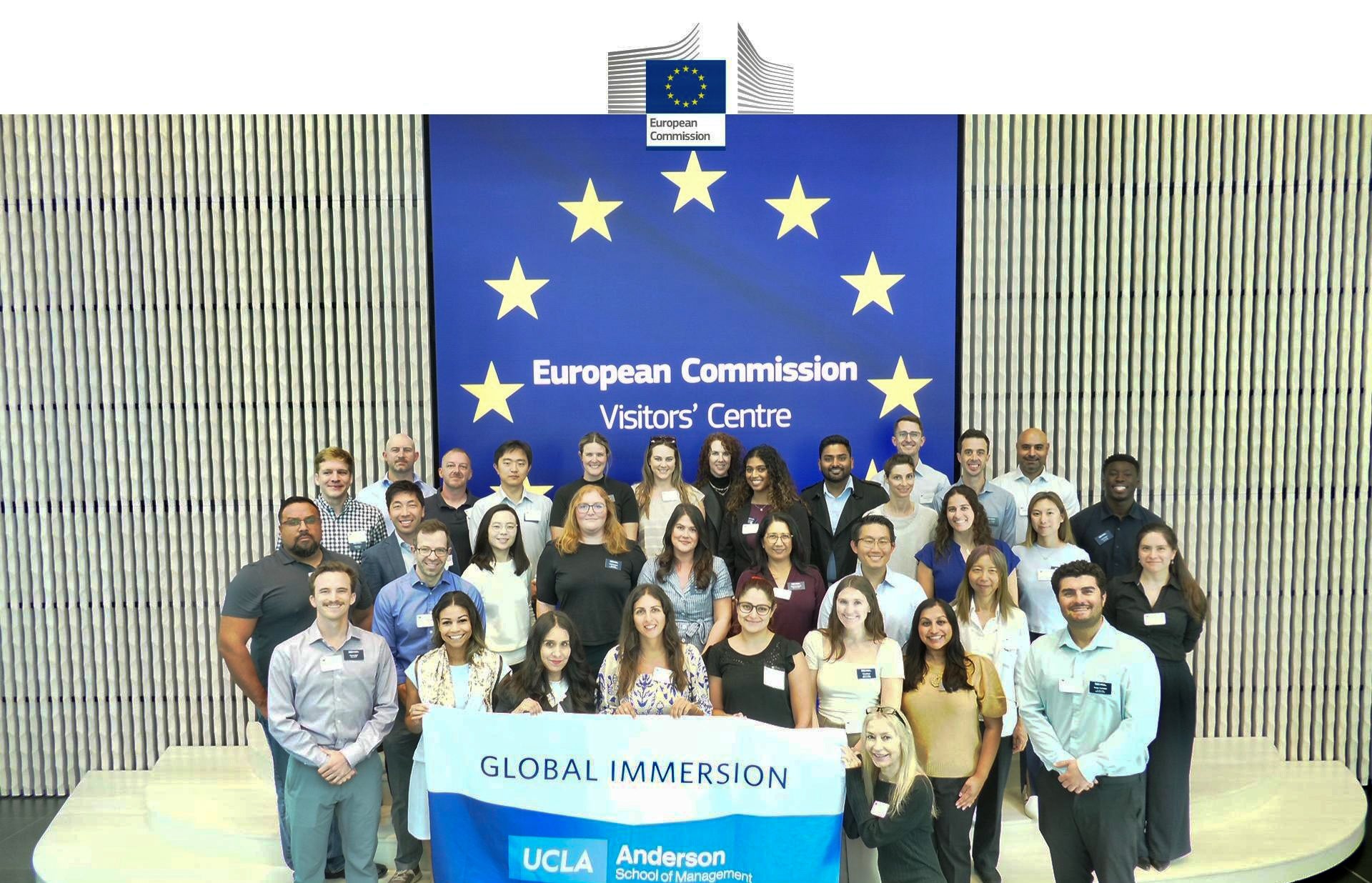
During summer break, 30 MBA students and two alumni from UCLA Anderson’s MBA programs participated in the second offering of the Center for Global Management’s sustainability-focused Global Immersion course, “Profit, Purpose and Policy: Lessons from Sustainable Business in Europe.” Led by Professor Henry Friedman, professor of accounting, the course once again examined the increasingly complex relationship between business performance, sustainability, and public policy through an intensive week of engagement with regulators, multinational corporations, investors, industry associations and sustainability practitioners across Belgium and the Netherlands. The in-country component built upon three pre-travel academic sessions and was designed to provide students with a firsthand understanding of how businesses and policymakers are responding to environmental and social challenges in one of the world’s most advanced sustainability policy environments.
As part of the course, students explored both the promises and pitfalls of corporate sustainability. While sustainability initiatives can improve resilience, innovation, competitiveness, and stakeholder trust, they also introduce costs, tradeoffs, reporting requirements, and strategic challenges. Europe continues to occupy a particularly influential position in this discussion. The European Union has emerged as one of the world’s most influential regulatory actors in areas including climate policy, sustainability disclosures, sustainable finance, emissions reduction and circular economy initiatives. With implications extending far beyond Europe to multinational corporations operating across global markets, the region offers important lessons for business leaders, investors, and policymakers, including those in California. The course therefore sought to expose students directly to the institutions, organizations, and executives working at the intersection of profit, policy, and purpose.
The immersion began in Brussels, often considered the de facto capital of the European Union. Following a cultural orientation and walking tour of the city’s historic center, students explored many of Brussels’ iconic landmarks, including the Grand Place, Galeries Royales Saint-Hubert, Manneken Pis, the Royal Palace district, and Saint Michael and Saint Gudula Cathedral. These experiences provided historical and cultural context for the week ahead while highlighting Brussels’ unique role as both a national capital and a center of European policymaking.
The academic portion of the program commenced at the European Commission. Katia Castellani introduced students to the role, structure, and functions of the Commission, helping clarify how legislation is developed and implemented across the European Union. Isobel Findlay from the Directorate-General for Climate Action then provided an in-depth discussion of EU climate policy and regulatory priorities. Students gained a clearer understanding of how European institutions are attempting to balance economic competitiveness, environmental objectives, and political realities while advancing climate initiatives. The session proved particularly valuable because it established a policy framework that students could reference throughout the week when evaluating the strategies, disclosures, and sustainability initiatives of companies across multiple industries. The visit provided an ideal foundation for understanding the broader policy landscape shaping sustainable business in Europe.
The focus then shifted from public institutions to corporate engagement with policymakers through a discussion with Annika Eberstein, Director of Government and Public Affairs at Philips. Eberstein explained how multinational corporations engage constructively with European institutions, regulators, and policymakers while pursuing business objectives and sustainability goals. Her presentation highlighted the increasingly important intersection of advocacy, regulation, climate policy, healthcare resilience and corporate strategy. Students learned how Philips navigates a rapidly evolving regulatory environment while pursuing its broader mission of improving health outcomes through innovation. The session also illustrated that sustainability is not solely an operational challenge but increasingly a matter of public affairs, stakeholder engagement and long-term strategic planning.
Later that day, the class visited UCB, the Brussels-headquartered global biopharmaceutical company. Through presentations by sustainability, investor relations, and environmental leadership teams, students examined how sustainability considerations are integrated into corporate strategy within the healthcare sector. Discussions explored environmental sustainability goals, reporting requirements, investor engagement, climate commitments, and the challenges of balancing patient outcomes with broader sustainability objectives. A tour of UCB’s headquarters campus further illustrated how sustainability principles are integrated into facilities design, employee well-being, and workplace experience. The session demonstrated that sustainability leadership often extends beyond environmental performance metrics to encompass governance, talent, culture, and stakeholder engagement.
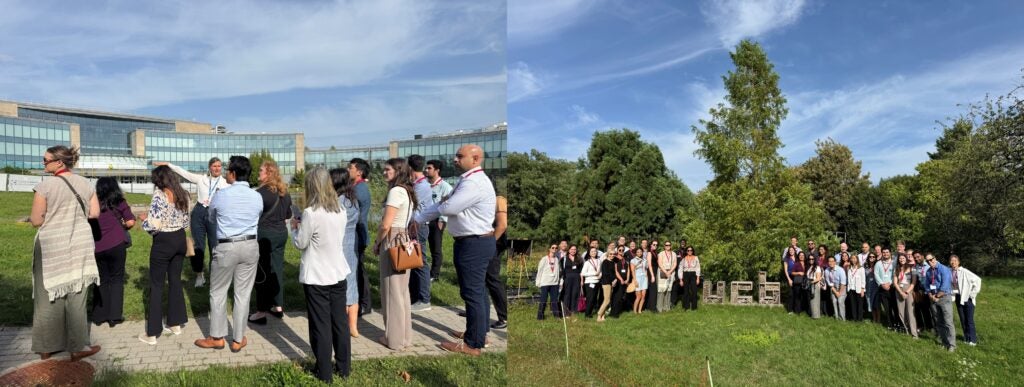
On the following day, the group traveled to Antwerp to examine sustainability challenges within the global diamond industry. At the Antwerp World Diamond Centre (AWDC), Michaël Geelhand de Merxem led a discussion on the evolving diamond supply chain, exploring issues such as conflict diamonds, lab-grown diamonds, category marketing and the governance frameworks that shape the global diamond industry. Students were particularly interested in the collective action challenges facing the industry and how sustainability standards are developed, monitored and enforced across international supply networks. The discussion highlighted the complexities that arise when sustainability objectives require cooperation among competitors, governments and consumers.
The class then visited HB Antwerp, an organization seeking to reinvent the traditional diamond value chain through technology, data analytics, traceability and advanced manufacturing. Students learned how HB Antwerp is using digital technologies to increase transparency, improve efficiency and create greater value for producing countries and stakeholders across the supply chain. A tour of the production facility allowed participants to observe advanced planning, cutting and polishing processes while examining how technology and innovation can support more sustainable and equitable business models. Discussions also addressed the company’s partnerships in Botswana and broader efforts to improve transparency throughout the global diamond industry. The visit offered a compelling example of how technological innovation can simultaneously create economic value while addressing sustainability challenges.
The afternoon concluded at Beyers Koffie, a leading Belgium coffee roaster. CEO Cory Bush and members of the leadership team provided an overview of the global coffee industry and the sustainability challenges facing coffee supply chains. Students examined topics including sourcing, climate risk, farmer livelihoods, traceability, recycling, packaging and coffee production economics. The discussion highlighted the tensions between affordability, sustainability and consumer expectations, while the facility tour offered firsthand insight into the complexity and scale of modern coffee roasting operations. Students were particularly interested in the evolving expectations placed upon businesses that operate across agricultural supply chains increasingly impacted by climate change and shifting consumer preferences.

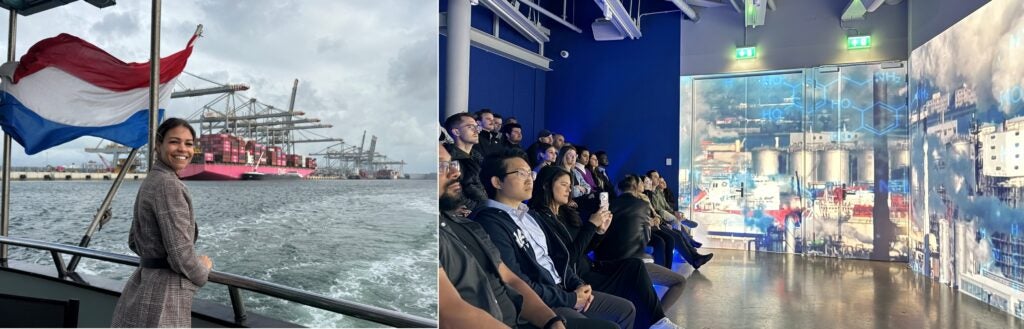
Midweek, the program transitioned from Belgium to the Netherlands, beginning with a stop in Rotterdam, home to Europe’s largest seaport. Students explored Portlantis and participated in a guided tour of the Port of Rotterdam, one of the most important logistics and energy hubs in the world. The visit highlighted the central role that ports play in both economic activity and the energy transition. Students explored how the Port of Rotterdam is positioning itself as a hub for Europe’s energy transition through investments in hydrogen, carbon capture and storage, offshore wind, shore power and other initiatives designed to support a more sustainable industrial future. The magnitude and complexity of the transition underscored the enormous investments and coordination required to achieve meaningful progress toward climate goals.
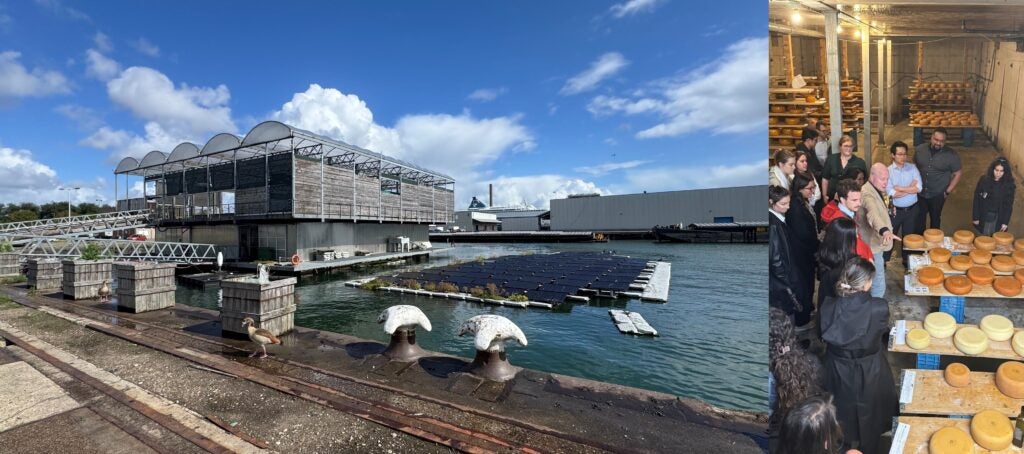
At Rotterdam’s Floating Farm, students explored innovative approaches to food production and urban resilience. Founder Peter van Wingerden discussed the origins of the concept, which emerged from concerns about supply-chain disruptions and food security following major climate-related events. The farm’s model seeks to localize food production, reduce transportation requirements, improve resilience, and bring consumers closer to food systems. Students toured the floating dairy facility, examined its circular design principles, and discussed the broader implications of climate adaptation and urban agriculture. The visit served as a tangible reminder that sustainability challenges often require creative rethinking of longstanding assumptions about infrastructure, geography and supply chains.
The Rotterdam experience was complemented by a presentation from Dyonne Rietveld of Uniper Benelux, who discussed the realities of energy transition within one of Europe’s most important industrial and energy regions. Students gained insight into the operational, regulatory, economic and social complexities involved in balancing energy security, affordability and decarbonization. The session emphasized that while ambitious climate targets are increasingly common, implementation requires difficult decisions, substantial investments, technological innovation and long-term collaboration among policymakers, utilities and industry stakeholders.
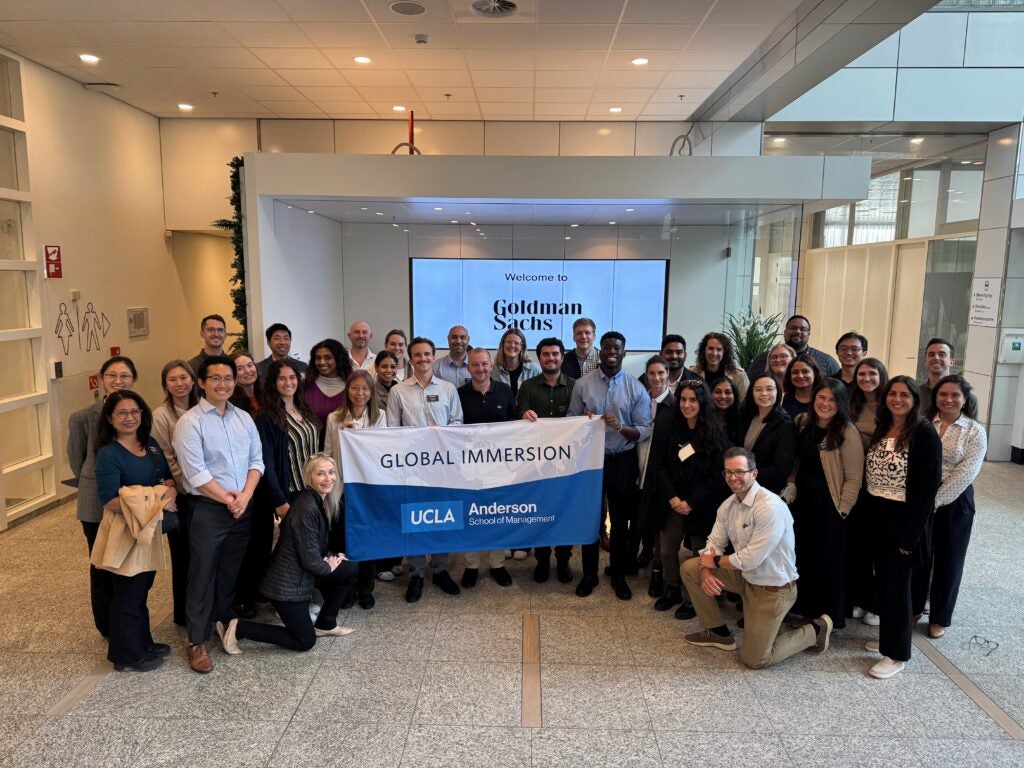
In The Hague, the class visited Goldman Sachs Asset Management to examine sustainable finance from an investor perspective. Isobel Edwards, Kaili Mao and Francesco Tassiano explained how green, social, and impact bonds are evaluated and incorporated into investment strategies. Discussions explored sustainability-related measurement challenges, standards development, disclosure frameworks, investor expectation, and the growing role of debt markets in financing environmental and social initiatives. The session provided students with a valuable capital-markets perspective and helped illustrate how sustainability considerations are increasingly incorporated into the evaluation of issuers, investment decisions, portfolio construction and sustainable debt instruments.
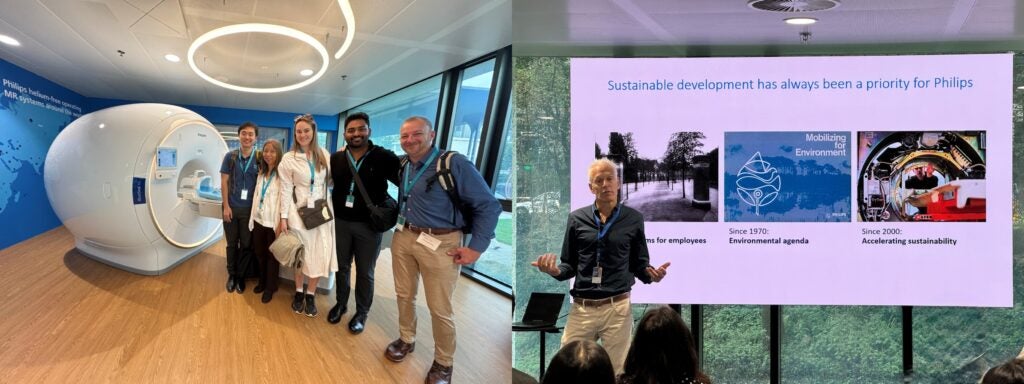
The Amsterdam portion of the program focused heavily on how sustainability principles are embedded within large multinational organizations. At Philips headquarters, Simon Braaksma discussed how sustainability is incorporated into strategy, performance measurement, governance and reporting. Students examined the company’s climate initiatives, disclosure practices, and efforts to create business value while improving health outcomes worldwide. Braaksma also provided insight into evolving European sustainability reporting standards and the increasing expectations being placed upon companies by regulators, investors, employees and customers.
At ING, Meike Proost described how sustainability objectives are being translated into actions across retail banking and customer engagement. Students explored the role financial institutions can play in supporting climate transition through lending, advising and stakeholder partnerships. Discussions focused on target setting, implementation challenges, customer behavior, and the practical realities of helping individuals and businesses navigate sustainability transitions. The session reinforced the important role financial institutions play in enabling broader economic transformation.
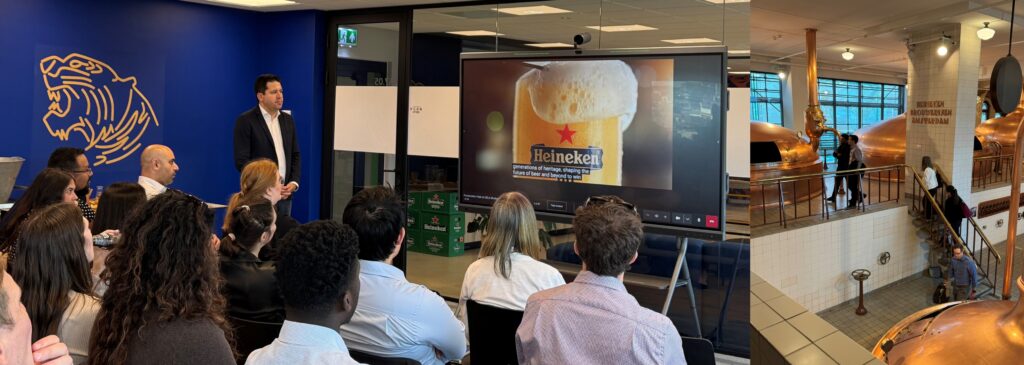
A visit to Heineken provided students with an opportunity to engage directly with a company they had studied extensively prior to travel. Nicolas Clerget and Jan-Willem Vosmeer discussed Heineken’s net-zero strategy, sustainability commitments, stakeholder engagement efforts and broader “Brew a Better World” agenda. Students examined how sustainability considerations influence operations across a global brewing enterprise, including climate strategy, supply chains, reporting and long-term business planning. The discussion provided powerful continuity between classroom preparation and real-world practice, helping students connect theoretical concepts with practical implementation. The subsequent Heineken Experience offered additional historical and cultural context regarding one of the Netherlands’ most iconic global brands.
The final day of formal programming broadened the discussion beyond individual companies to include broader societal and infrastructural challenges. Hans van Bochove provided an insider’s perspective on corporate advocacy and public policy engagement within the European Union, drawing upon decades of experience in public affairs and his most recent role leading EU affairs at Heineken. Students gained a deeper understanding of how businesses engage policymakers while navigating evolving regulatory landscapes.
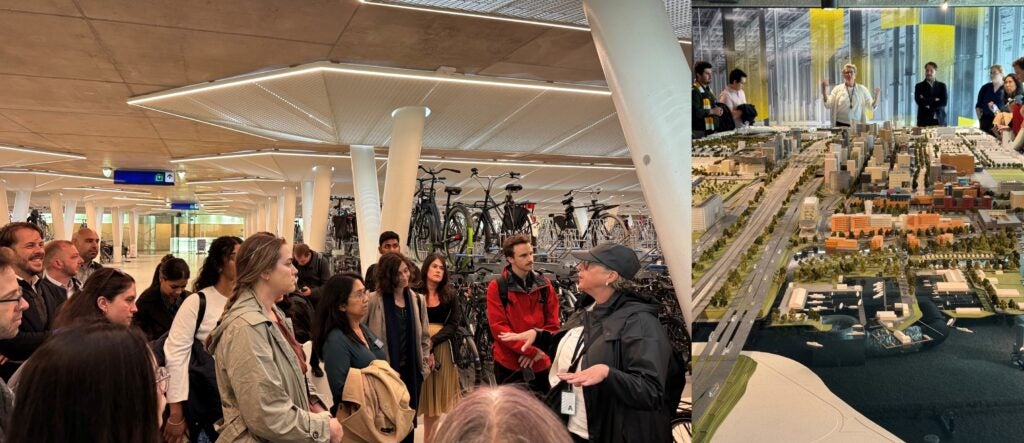
The conversation then turned toward climate adaptation and water management. Through discussions centered on Amsterdam’s resilience strategies and broader Dutch expertise in living with water, students explored how governments, communities and businesses are responding to rising climate risks. These themes were further reinforced during the concluding visit to Arcadis, where students examined the intersection of sustainability, urban development, mobility, infrastructure and technology. Presentations and a site visit to the major Zuidasdok redevelopment project demonstrated how cities are attempting to become more resilient, efficient and livable while preparing for future environmental and demographic challenges. Students left with a stronger appreciation for the increasingly interconnected nature of sustainability, infrastructure, public policy and economic development.
Throughout the week, several common themes emerged. Students repeatedly observed that sustainability is no longer a standalone corporate initiative but an increasingly central element of business strategy. They saw firsthand how regulations, capital markets, customers, employees and communities are reshaping corporate decision-making. At the same time, they witnessed the significant challenges organizations face in balancing environmental and social ambitions with economic realities. Across sectors as diverse as healthcare, energy, finance, agriculture, consumer goods, infrastructure and luxury products, leaders emphasized the importance of long-term thinking, collaboration, innovation, measurement and stakeholder engagement.
The 2026 Global Immersion ultimately provided participants with a deeper understanding of how profit, purpose, and policy interact in practice. By engaging directly with regulators, multinational corporations, executives, investors, industry associations and sustainability leaders throughout Belgium and the Netherlands, students gained valuable insight into Europe’s evolving sustainability landscape and the lessons it offers for organizations around the world. Equally important, the experience reinforced UCLA Anderson’s commitment to developing globally minded leaders capable of navigating increasingly complex business environments where financial performance, public policy and societal impact are becoming ever more interconnected.
CGM sidebar
- New Courses Continue to Expand Global Management Curriculum
- When a Capstone Becomes a Calling: Ankit Choudhary’s Journey from UCLA Anderson to Project Mercy
- Creating Global Impact in Rwanda and Ethiopia: UCLA Anderson’s Global Social Impact Consulting East Africa Capstone
- Developing a Business-to-Government Growth Strategy for a UK-Based Tandem App/Platform
- How Political Connections Distort Human Capital Investment and the Allocation of Talent Within Firms and Public Organizations
- Global Management Specialization Graduate Mick Morris (’26)
- Global Management Specialization Graduate: Marisa Lue (’26)
- Global Management Specialization Graduate: Aneesha Kumar (’26)
- CGM Welcomes International Exchange Students to UCLA Anderson for a Week of Global Learning and Networking
- Technology-Based Transformation of Greater Asia in the Age of Agentic AI
- Congratulating the Class of 2026 Outstanding Students in Global Management and Leadership
- Building Community with Globally Minded UCLA Anderson Alumni
- Students Explore Technology, AI and Innovation in Shenzhen and Singapore
- Students Travel to Paris and Bordeaux to Explore France’s Diversified Economy, Global Brands and Role in the European Union
Follow Us


