

Students Travel to Chile for a Perspective on Doing Business in an Advanced Middle-Income Country
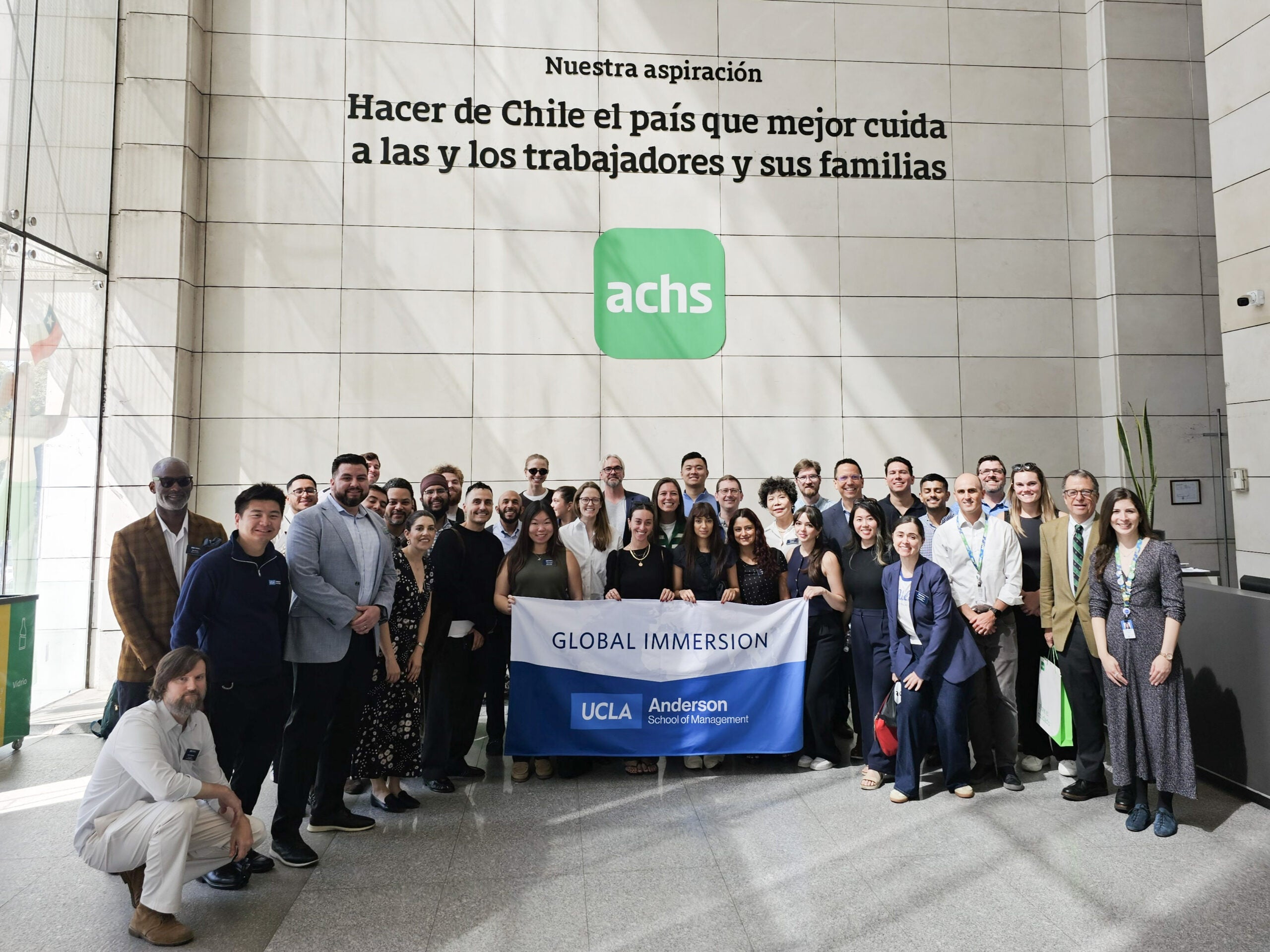
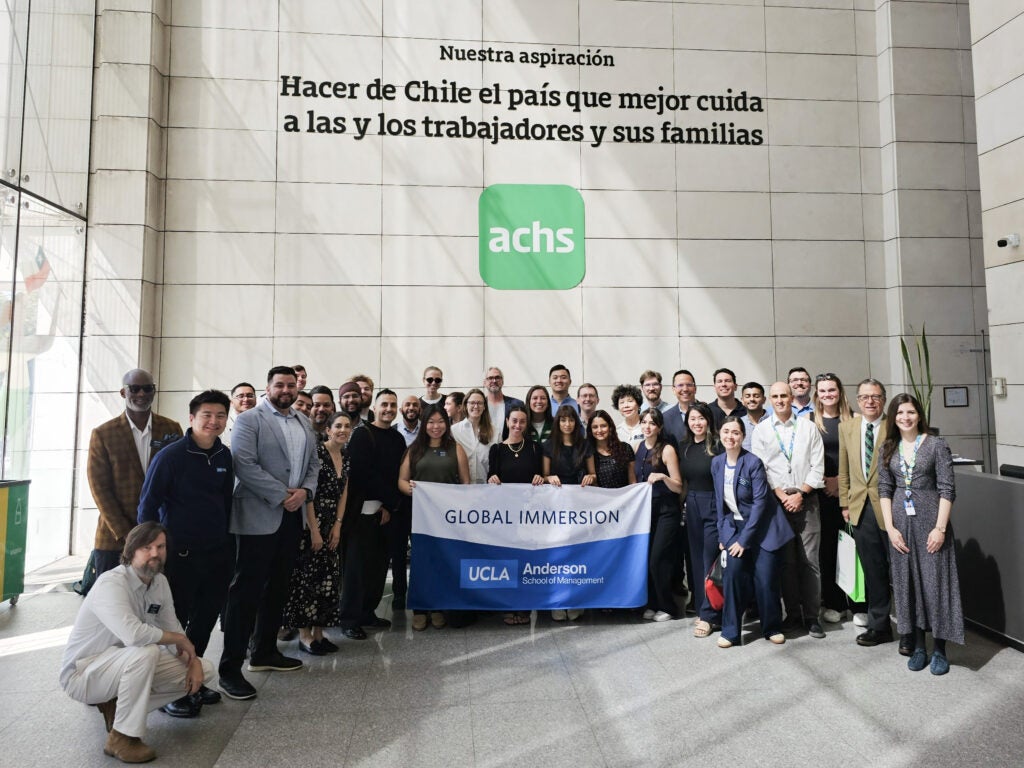
During spring break, from Sunday, March 22 to Saturday, March 28, 2026, 35 MBA students from all four UCLA Anderson MBA programs traveled to Santiago, Chile as part of the Global Immersion course “Doing Business in an Advanced Middle-Income Country: Chile.” The course, taught by Sebastian Edwards, UCLA Distinguished Professor and Henry Ford II Chair in International Management and a native of Chile, marked the seventh time Professor Edwards has led a Global Immersion course to Chile. As with prior iterations, the program was designed to provide students with a rigorous, first-hand understanding of how business decisions are shaped in a country where political, economic, and social institutions are evolving and where the future rules of the game are actively being debated and redefined.
Chile offers a uniquely rich setting for study. Over the past several decades, it has been one of Latin America’s most successful economies, combining macroeconomic stability, strong institutions, and global integration with persistent inequality, social tension, and growing political fragmentation. The course examines how these dynamics affect investment, corporate strategy, entrepreneurship, and policymaking. During on-campus sessions prior to departure, students studied Chile’s economic model, its political institutions, the legacy of market-oriented reforms, and the events that have fueled public debate since the social unrest of 2019. These foundational discussions were complemented in-country by meetings with senior public officials, business leaders, entrepreneurs, and UCLA alumni, who together offered a multidimensional view of Chile’s opportunities and challenges.
Students arrived in Santiago on Sunday afternoon and began the program with an immersive city tour introducing them to Chile’s historical, political, and urban landscape. Traveling by coach and on foot, the group visited central landmarks including Plaza de Armas and La Moneda Presidential Palace, passing by and learning about the Metropolitan Cathedral, the former National Congress, and the Stock Exchange, before transitioning to more contemporary spaces such as Bicentennial Park in the modern business district. This first day set the tone for the week, grounding subsequent discussions of policy and business in a concrete understanding of Chile’s past, present, and physical geography.
The academic program began on Monday at the Centro de Estudios Públicos (CEP), one of Chile’s most influential and respected think tanks. CEP served as the primary academic venue for the week and provided an ideal setting for discussions on public policy, politics, and economic governance. The opening session examined Chile’s political landscape with Mario Marcel, former Minister of Finance (March 2022 to August 2025) and former Governor of the Central Bank of Chile. (December 2016 to January 2022). Drawing on his extensive experience in fiscal policy, monetary governance, and public finance, Marcel offered students a candid assessment of Chile’s recent political trajectory, macroeconomic constraints, and the challenges of balancing fiscal responsibility with social demands in an increasingly polarized environment.
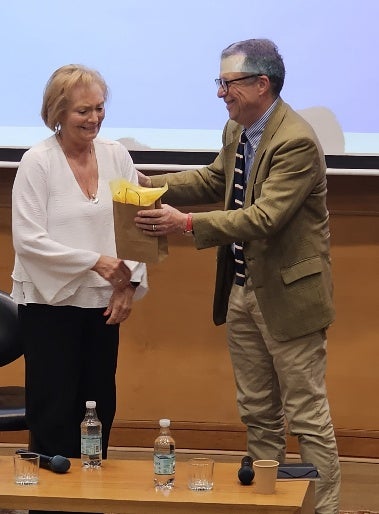
This political framing was followed by a discussion on corporate governance and board dynamics in Chile led by Vivianne Blanlot, former Minister of National Defense (March 2006 to March 2007), who has served as a board director at major Chilean companies including Colbún, Antofagasta Minerals, and Empresas CMPC. Blanlot explored how boards operate in Chile’s corporate ecosystem, the evolving role of directors, and the growing emphasis on sustainability, transparency, and stakeholder engagement. She also touched on women’s rights and equality in the workplace. Her perspective bridged the public and private sectors and highlighted how governance norms in Chile compare with global practices.
The morning concluded with an examination of tourism as a strategic sector of the Chilean economy. Gonzalo Undurraga, Chief Executive Officer of Explora, discussed the company’s distinctive business model, built around conservation, experiential travel, and sustainability in some of Chile’s most remote regions. He explained how thoughtfully developed tourism, can serve as both an economic engine and a mechanism for protecting fragile ecosystems, while also highlighting the vulnerabilities inherent in operating luxury hospitality businesses amid periods of disruption – such as the COVID-19 pandemic – and in geographically extreme and environmentally sensitive locations.
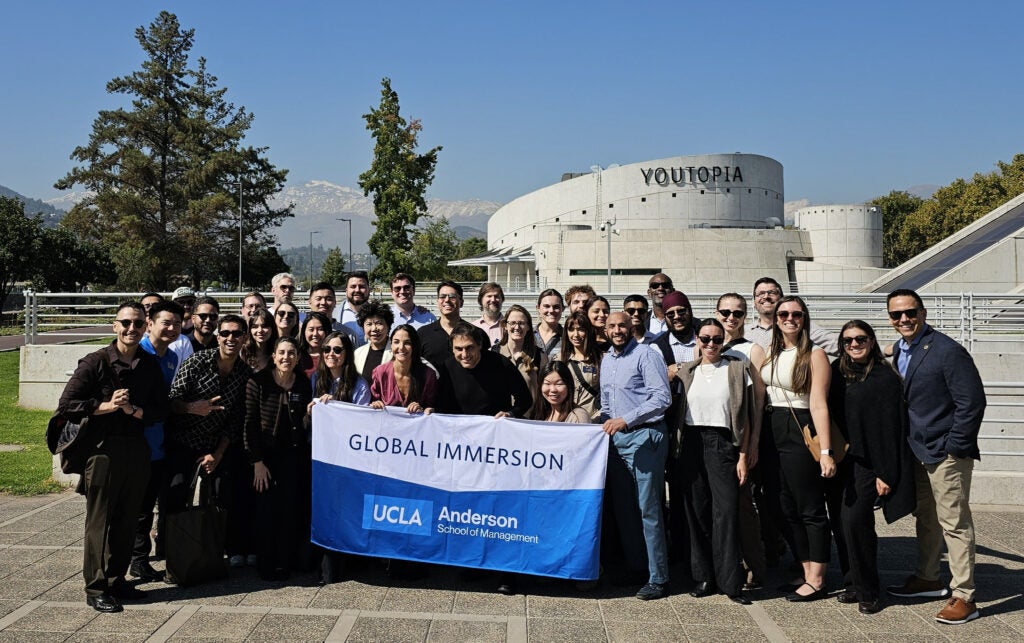
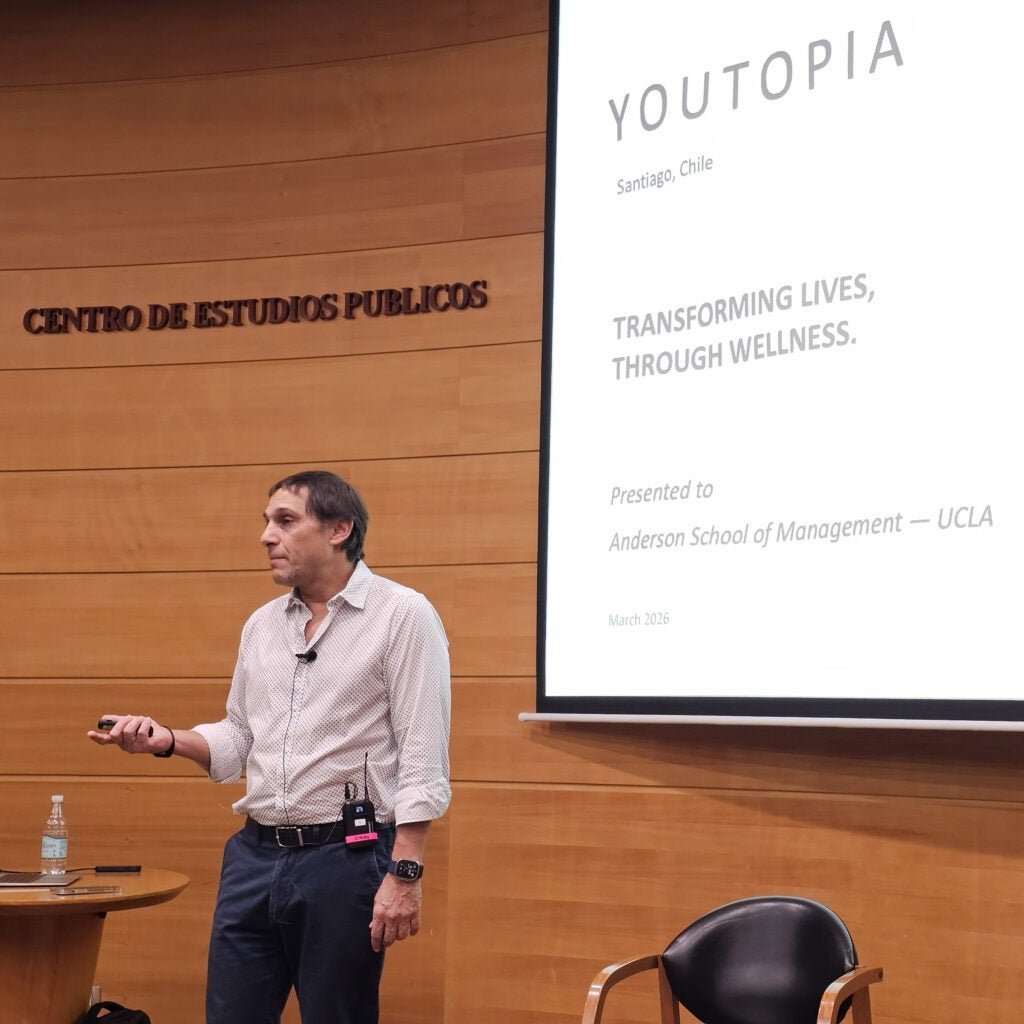
Later that afternoon, students visited Youtopia, a Chilean wellness company that pioneered the concept of “wellness hospitality” in the country. The site visit provided exposure to an innovative business model that integrates fitness, health, design, and community. The following day, students returned to CEP for an in-depth discussion with Rodrigo Abumohor (’00), CEO of Manufacturas Interamericanas Group, whose family has been an owner ofYoutopia. Abumohor shared insights into entrepreneurship, value creation, and growth strategies, reflecting on the challenges of scaling differentiated concepts while preserving brand identity and purpose.
Tuesday’s program returned to CEP for a deep dive into Chile’s natural resource sectors, beginning with copper and lithium. Máximo Pacheco, former Minister of Energy (2014-2016) and Chairman of the Board of CODELCO, provided a comprehensive overview of the strategic importance of copper and lithium to Chile’s economy and the global energy transition. As the world’s largest copper producer and a key holder of lithium reserves, Chile occupies a critical position in global supply chains. Pacheco discussed investment cycles, sustainability challenges, technological innovation, and the role of the state in managing strategic resources through state-owned enterprises. CODELCO is Chile’s flagship SOE, that was created after the nationalization of copper in 1971.
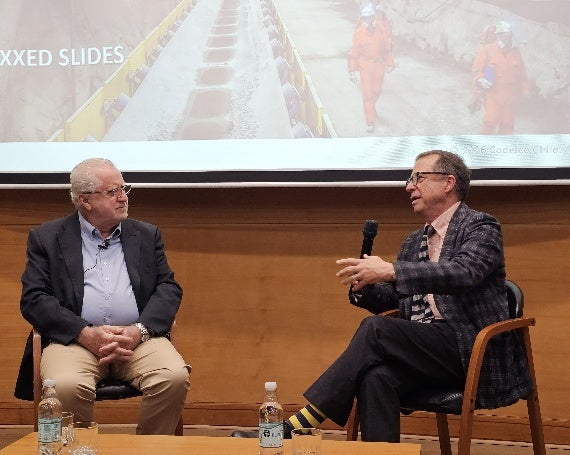
The conversation then shifted to one of Chile’s most debated public policy issues: pensions. Karol Fernández, Chair of the World Pension Alliance and Executive Vice President of the International Federation of Pension Fund Administrators, offered a detailed overview of Chile’s pension system, its historical design, perceived shortcomings, and ongoing reform debates. Students gained insight into why a system once praised internationally has become a focal point of public dissatisfaction and political contention, and how pension reform intersects with demographics, labor markets, and fiscal sustainability.
That afternoon, students concluded the academic day with a cultural visit to Sky Costanera, the tallest skyscraper in South America, where panoramic views of Santiago and the Andes provided a striking visual context for discussions about urban development, inequality, and modernization.
On Wednesday, the group shifted focus to healthcare and renewable energy. The morning featured a visit to Hospital del Trabajador, part of the ACHS network, where students toured one of Chile’s leading institutions specializing in occupational health, trauma care, and rehabilitation. UCLA Anderson alumni Benjamín Mujica (’19) and Trinidad Uribe (’25) discussed the healthcare system in Chile, healthcare management, and innovation within a mission-driven health organization.
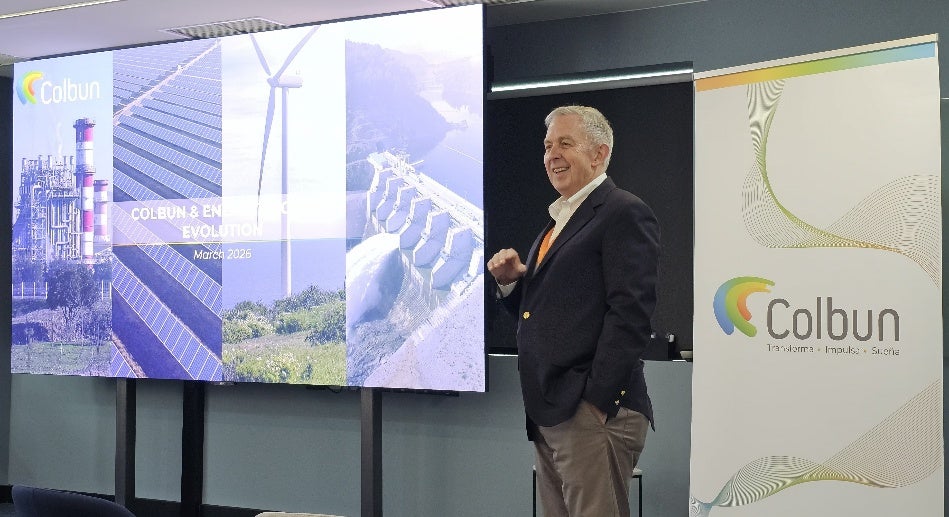
In the afternoon, students visited Colbún S.A. for a session led by Hernán Rodríguez Wilson (’93), Chairman of the Board. The discussion focused on renewable energy, water management, and desalination, highlighting Chile’s ambitious energy transition and the operational realities of integrating renewable generation at scale. The day concluded with an alumni networking reception at the W Hotel, where students connected with local alumni and experienced firsthand the strength of the UCLA Anderson global community.
Thursday’s program explored Chile’s maritime economy, finance, and technology. The morning session examined Regata Chiloé as a case study in competition, culture, and oceanic tourism, led by Rodrigo Guzmán (’99) of Oceanic Chile. This discussion illustrated how sports and tradition can serve as catalysts for regional economic development and cultural preservation. A finance alumni roundtable followed, featuring Andrés Chechilnitzky (’03) of Brox Capital, Juan Guillermo Agüero (’95) of BTG Pactual, and Claudio Chamorro (’02) of Parque Arauco, who compared investment environments, capital markets, and geopolitics.
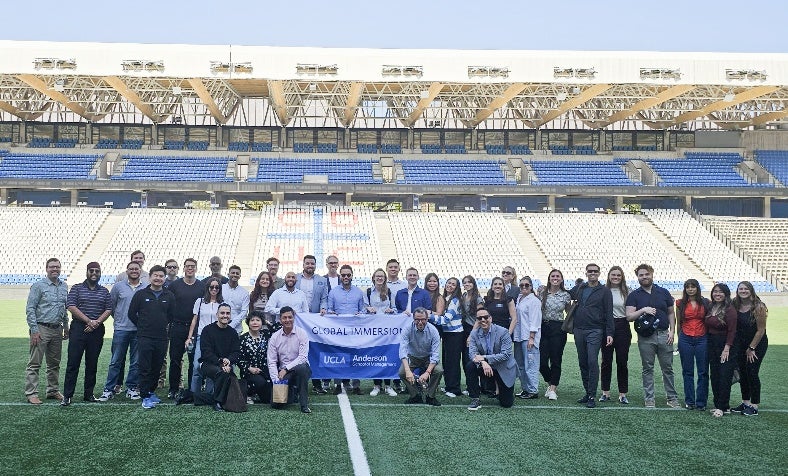
The day continued with a technology-focused session with Victoria Hurtado, Vice President of Innovation at Microsystem S.A., who discussed digital transformation, AI governance, cybersecurity, information management, and the intersection of technology, regulation, and public policy. In the late afternoon, students traveled to Claro Arena, a modern sports venue in Santiago owned by Club Deportivo Universidad Católica that serves as the club’s primary home stadium, for a behind-the-scenes tour and look at sports infrastructure and live entertainment, guided by owner Matías Claro, gaining insight into large-scale venue development and multi-use asset management.
Friday brought the program toward its conclusion, beginning with a session on aquaculture and fishing led by Ricardo García (M.A. ’89), Vice Chairman of Camanchaca. The discussion highlighted Chile’s ocean economy, sustainability challenges, and the impact of climate change on marine resources. This was followed by a contextual visit to the Museum of Memory and Human Rights, offering students space to reflect on Chile’s recent history and how political institutions, social forces, and broader sectors of society shaped – and responded to – human rights violations during the country’s recent past.
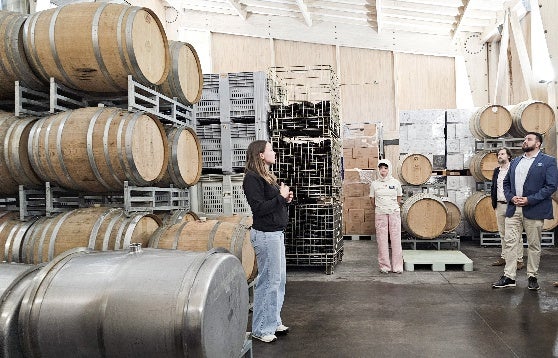
In the afternoon, the group traveled to the Casablanca Valley to visit Kingston Family Vineyards, where founder and CEO Courtney Kingston discussed the business of wine in Chile, entrepreneurship, and pioneering innovation in cool-climate viticulture. The visit concluded with a vineyard tour, wine tasting, and farewell dinner, providing a reflective and communal close to an intensive week.
By the end of the program, students had gained a nuanced understanding of Chile as a country of immense potential and complex challenges. Through direct engagement with leaders, including many alumni, shaping Chile’s economy, institutions, and future, students left with a deeper appreciation for how business decisions are made in environments where uncertainty, opportunity, and change coexist – and where global forces meet local realities in powerful ways.
CGM sidebar
- New Courses Continue to Expand Global Management Curriculum
- When a Capstone Becomes a Calling: Ankit Choudhary’s Journey from UCLA Anderson to Project Mercy
- Creating Global Impact in Rwanda and Ethiopia: UCLA Anderson’s Global Social Impact Consulting East Africa Capstone
- Developing a Business-to-Government Growth Strategy for a UK-Based Tandem App/Platform
- How Political Connections Distort Human Capital Investment and the Allocation of Talent Within Firms and Public Organizations
- Global Management Specialization Graduate Mick Morris (’26)
- Global Management Specialization Graduate: Marisa Lue (’26)
- Global Management Specialization Graduate: Aneesha Kumar (’26)
- CGM Welcomes International Exchange Students to UCLA Anderson for a Week of Global Learning and Networking
- Technology-Based Transformation of Greater Asia in the Age of Agentic AI
- Congratulating the Class of 2026 Outstanding Students in Global Management and Leadership
- Building Community with Globally Minded UCLA Anderson Alumni
- Students Explore Technology, AI and Innovation in Shenzhen and Singapore
- Students Travel to Paris and Bordeaux to Explore France’s Diversified Economy, Global Brands and Role in the European Union
Follow Us


