


First Year Perspectives: Surviving the “Wilderness” With My Learning Team
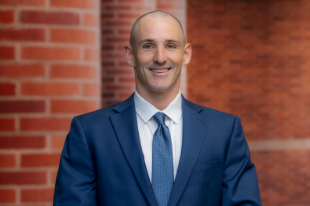
About John: John grew up in Columbia, MD before settling in southern California in 2013. He studied Literary Journalism at UC Irvine, writing features and columns for the university publication’s sports section and hosting a sports talk radio show on 88.9FM in Irvine. After graduating, he spent seven years in sales roles in consumer products, including automotive and residential/commercial water filtration systems, and created the sales operations function at his most recent company, LifeSource Water Systems. At Anderson, John looks to pivot into general strategy roles by leveraging his experience on the execution side to solve business problems and make big-picture impact.
I was in the middle of the Arctic wilderness, deciding whether to salvage my cigarette lighter, sleeping bag, or a bottle of whisky from the flaming wreckage of our plane. Of course, this was just a team building exercise with my newly minted “learning team,” in which we deliberated on the importance of mundane items and their utility in a frozen wasteland, and we were safely within the confines of a glass cubicle in the Anderson library.
But I was in a wilderness of another sort, tasked with agreeing on a definitive ranking in the next 15 minutes with four strangers from disparate corners of the globe, with unique backgrounds, work experience, culture, and professional and academic standards. This was the first situation of many to come in my Anderson career in which I would be solving problems with my learning team and honing my leadership style for my post-MBA career.
A prominent gap in my work experience is the lack of formal team environments centered around problem-solving, let alone situations in which many diverse perspectives were represented. My sales background could be very individualistic at times, where each rep is ultimately responsible for their output, consulting with clients, closing deals, and chasing revenue. It was a goal of mine to seek out as many diverse teams as I could during business school to strengthen my teamwork ability, and collaborate to create work that would be unachievable by myself. My wish was about to be granted.
After arriving on campus, our class of roughly 300 students is divided into four sections of about 75 students each. Each section is then broken into learning teams, groups of five that are intentionally constructed so each team represents a wide range of perspectives, nationalities, professional backgrounds, and post-MBA career goals.
I quickly realized that while my learning team was incredibly different from me on paper, we were actually quite similar in one important way: we were all navigating the same transition. Each of us had just left careers where we developed expertise and confidence, and suddenly we were back in an environment where we were learning entirely new disciplines together like accounting, finance, operations, and strategy. None of us had all the answers, which meant that collaboration wasn’t just encouraged, it was necessary.
Over the past several months, my learning team and I have built more slide decks, presentations, and case analyses than I can count. But what has stood out most is not the volume of work, it’s how differently we approach problems. One teammate might immediately focus on the financial implications of a decision, another on operational feasibility, while someone else zooms out to think about the broader strategic context. Early on, those differences sometimes made it harder to reach consensus. But over time, those same differences became our biggest advantage. The best ideas usually emerged not from any one person’s perspective, but from the friction between them.
Perhaps the most valuable aspect of the learning team experience has been the opportunity to experiment with leadership. Sometimes that means stepping up to organize the work or push the group toward a decision. Other times it means stepping back and making space for someone else’s expertise to shape the direction of the project. Learning when to do each has been just as important as the academic content we’re studying.
The simulated survival exercise in a frozen wilderness turned out to be a fitting metaphor for the MBA experience itself. None of us arrives at Anderson with all the tools needed to navigate the next stage of our careers. By combining our different perspectives, experiences, and ways of thinking, we’re able to solve problems that would be far more difficult alone.
The countless hours have turned five strangers into a group built on trust, respect, and effort. It’s where many of my most meaningful bonds have been formed, and it’s these relationships that I know will remain some of the most valuable and lasting parts of my time at Anderson.
Student Blogger: John Nardolillo ‘27
Undergrad: University of California, Irvine ’17
Pre-MBA: LifeSource Water Systems
Leadership@Anderson: Director of Admit Events, Admissions Ambassador Corps; Riordan MBA Fellow Mentor Coordinator
mba insider single
- Out@Anderson Hosts 2026 Awareness Week Celebrating LGBTQ+ Community and Storytelling
- Reviving a Tradition During Black History Month: The BBSA Legacy Conference at UCLA Anderson
- First Year Perspectives: Both/And – Entertainment and Consulting at Anderson
- First Year Perspectives: What Makes Anderson’s Curriculum Unique For Future Business Leaders
- First Year Perspectives: What Recruiting at Anderson Taught Me
- First Year Perspectives: From Greenlights to Grades – Translating a Creative Career into a MBA
- First Year Perspectives: The Hidden Strength International Applicants Have and Don’t Realize
- First Year Perspectives: From the Workplace to the Classroom, Relearning How to Learn
- First Year Perspectives: Why Anderson’s Culture Matters
- First Year Perspectives: Breaking Records and Building Community at 11,000 feet
- First Year Perspectives: How Being a Double Bruin Impacted My Personal and Professional Journey
- First Year Perspectives: Diving Into Entertainment at Anderson
- First Year Perspectives: From NYC to LA, Building Home and Belonging at Anderson
- First Year Perspectives: My Journey as an International Student Arriving at UCLA Anderson
- First Year Perspectives: Reflecting on Round 2 – Tips for First Time Applicants
- Day in the Life: Healthcare Consultant at Boston Consulting Group (BCG)
- Day in the Life: Product Manager (Non-Tech) at Amazon
- Day in the Life: MBA GBT Marketing Intern at Mattel
- First Year Perspectives: Dissecting Healthcare Opportunities at UCLA Anderson
- First Year Perspectives: The Power of Learning Teams and Diverse Perspectives
- First Year Perspectives: What “Share Success” Really Means at Anderson
- First Year Perspectives: The Product Manager Pivot at UCLA Anderson
- First Year Perspectives: How to Understand Anderson Best – Talking to Current Students
- First Year Perspectives: Why Anderson, From the Perspective of a Round Three Applicant
Follow Us


